HOMER review 2027
A personalised early-reading program built around the child's own interests, for ages 2–8

Is the HOMER Worth It?
Best personalised reading path for preschoolers. HOMER is a gentle, well-made start to reading that a 3-year-old can use alone. Against Reading Eggs it is less systematic and against Khan Academy Kids it is not free, which is why it sits mid-table.
HOMER Pros & Cons
- Reading path adapts to the child's stated interests (dinosaurs, space…)
- No ads or in-app purchases
- Short sessions suited to 3–5-year-olds
- Four profiles
- Narrower than Reading Eggs on phonics structure
- Less content beyond reading
- Price is close to Reading Eggs with less inside
What problem does HOMER solve for preschoolers?
HOMER is a personalised early-reading program built around the child's own interests, for ages 2–8. The problem it addresses is motivation: a preschooler who will not sit still for a phonics drill may still follow a reading path that has been shaped around dinosaurs or space. The verdict headline calls it the best personalised reading path for preschoolers, and the tested strengths back that up — the reading path adapts to the child's stated interests, there are no ads or in-app purchases, sessions are short enough for 3–5-year-olds, and up to four profiles are supported. It is a gentle, well-made start to reading that a 3-year-old can use alone.
How did HOMER score on each criterion?
The overall score is 7.8, placing HOMER sixth of nine kids learning apps tested. The breakdown:
- Learning — 22/30. Measures alignment to grade-level standards, adaptive difficulty, and measured progress in the two-week trial.
- Engagement — 17/20. Measures whether the child asked to use it again, and how much of a session was learning versus reward animation.
- Parent tools — 12/15. Measures progress reports, time limits, multiple child profiles, teacher/parent dashboard.
- Safety & ads — 15/15. No third-party ads, COPPA-compliant, no in-app purchases inside the child view.
- Value — 12/20. Annual price per child against what is free elsewhere.
Safety is a clean sweep and engagement is close behind. Learning and value are where the points were left on the table.
What does HOMER do best?
Four strengths stood out in testing. First, the reading path adapts to the child's stated interests — dinosaurs, space and similar topics shape what the child sees next, which is the feature the verdict headline singles out. Second, there are no ads or in-app purchases, so nothing interrupts a session and nothing asks a parent for money mid-lesson. Third, sessions are short and suited to 3–5-year-olds, which matches how long a preschooler will actually attend. Fourth, up to four child profiles are supported, enough for a larger household.
What is HOMER made of, and what does it run on?
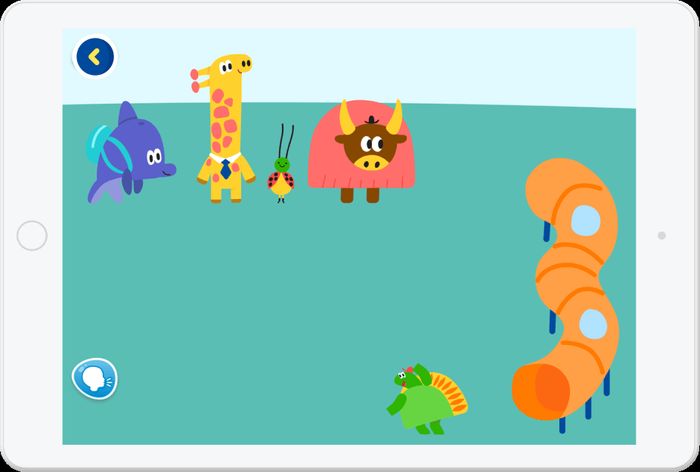
The specification is straightforward. HOMER covers ages 2–8 across reading, math, social-emotional and creativity subjects. It costs $9.99/mo or $59.99/yr, with a trial as the free tier. There are no ads. It runs on iOS, Android, Fire and web. Up to four child profiles are supported, and parent reports are included.

How does HOMER compare with its rivals?
Khan Academy Kids scores 9.1 and is free, covering ages 2–8 with reading, math, logic, social-emotional lessons and books, no ads, multiple child profiles and parent reports on iOS, Android and Fire. HOMER matches it on ad-free delivery and profile support but charges $59.99/yr for a narrower subject set.
Reading Eggs scores 8.7 at $12.99/mo or $89.99/yr with a 30-day free trial, covering ages 2–13 in phonics, reading, spelling and comprehension, plus maths via Mathseeds, on web, iOS and Android with up to four profiles and lesson-level reports. HOMER is the cheaper annual option but narrower on phonics structure.
ABCmouse scores 8.0 at $14.99/mo or $59.99/yr, covering ages 2–8 with reading, math, science, art and music across web, iOS, Android and Fire, up to three profiles and parent reports. HOMER matches the annual price and offers one more profile, but ABCmouse lists a broader activity set.
| HOMER | Khan Academy Kids | Reading Eggs | ABCmouse | |
|---|---|---|---|---|
| Our score | 7.8 | 9.1 | 8.7 | 8.0 |
| Ages | 2–8 | 2–8 | 2–13 | 2–8 |
| Subjects | Reading, math, social-emotional, creativity | Reading, math, logic, social-emotional, books | Phonics, reading, spelling, comprehension; maths via Mathseeds | Reading, math, science, art, music |
| Price | $9.99/mo or $59.99/yr | Free | $12.99/mo or $89.99/yr; 30-day free trial | $14.99/mo or $59.99/yr |
| Free tier | Trial | Yes | Trial | Trial |
| Ads | None | None | None | None |
| Platforms | iOS, Android, Fire, web | iOS, Android, Fire | Web, iOS, Android | Web, iOS, Android, Fire |
| Child profiles | Up to 4 | Multiple | Up to 4 | Up to 3 |
| Parent reports | Yes | Yes | Yes, by lesson | Yes |
Where does HOMER fall short?
It lost ground on value and depth against Reading Eggs and Khan Academy Kids. Three tested drawbacks explain that: it is narrower than Reading Eggs on phonics structure; there is less content beyond reading; and the price sits close to Reading Eggs with less inside. For a household that wants a full early-years curriculum rather than a reading-first path, those are the trade-offs to weigh.
Is HOMER good value?
The price summary is $9.99, and the measured annual price is $59.99 per year. Against that, the value criterion returned 12 out of 20 — the lowest share of any criterion in the breakdown, because the same money buys more elsewhere and one close rival is free.
Who should buy HOMER?
HOMER remains right for preschoolers who need interest-led motivation. If a child resists a fixed phonics sequence but will engage when the material reflects what they already like, the adaptive path and short sessions are the reason to choose it. Parents who want the deepest phonics structure or the widest subject coverage should look at the higher-scoring alternatives above.
HOMER at a Glance
Rubric v1: Learning 30 · Engagement 20 · Parent tools 15 · Safety & ads 15 · Value 20. Score = Σ ÷ 10, locked Sep 11, 2026. How we rank.
Where to buy — prices checked Sep 11, 2026
HOMER specifications
Where it loses
Value and depth against Reading Eggs and Khan Kids.
Still the right pick for
Preschoolers who need interest-led motivation.
What owners say
No reader ratings yet. This block fills in from real submissions only — we never write, buy or generate reader reviews, and none of them touch the editor score.
Every submission is read by a person before it appears. Reader opinion is published separately and never changes our score.
Changelog: Sep 11 — rank 2 → 3 · all changes